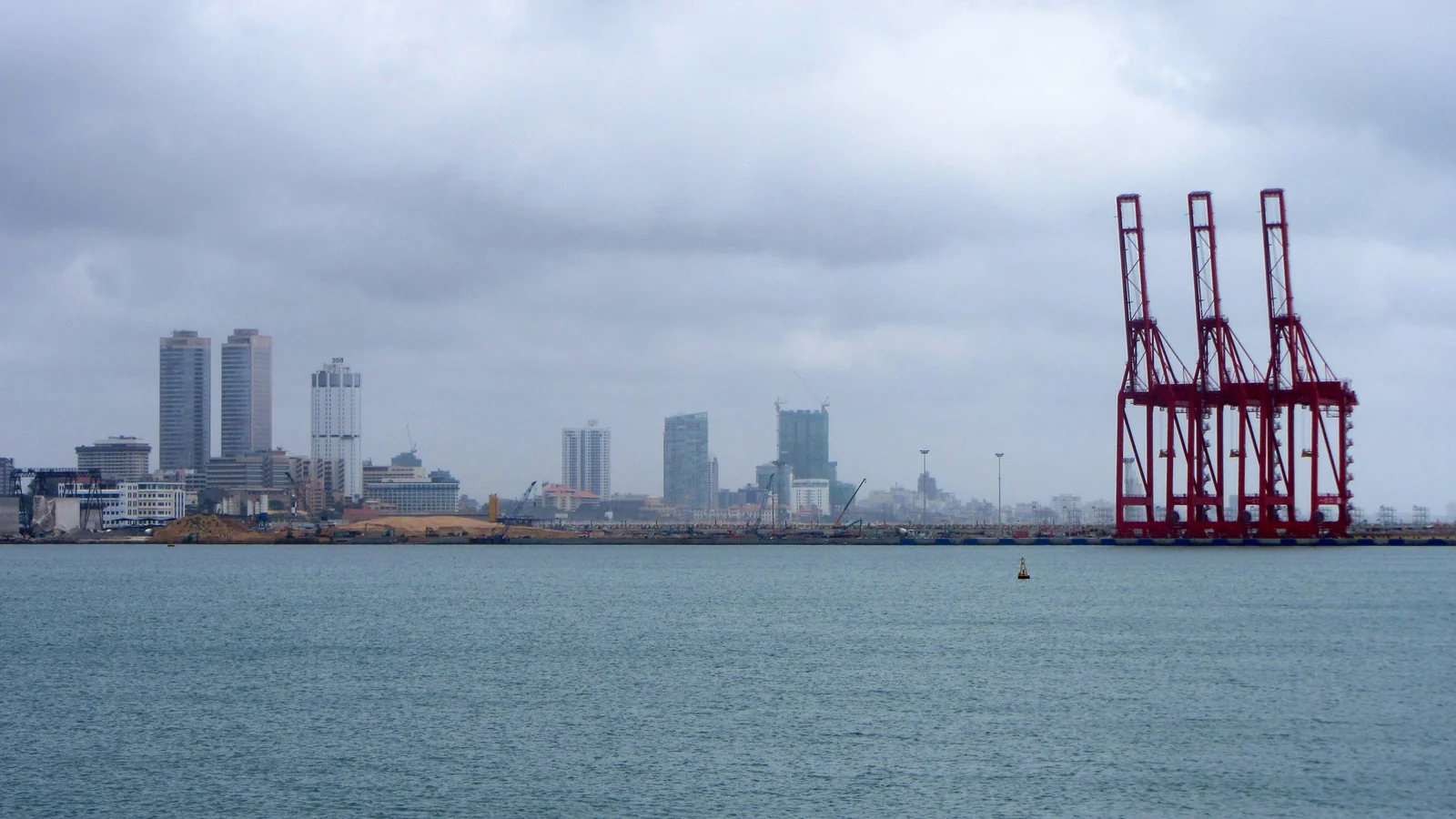
On 30 September 2026, Sri Lanka’s Prime Minister, Dr Harini Amarasuriya, inaugurated the USD 750 million Phase II expansion of Colombo West International Terminal (CWIT) in the Port of Colombo. According to the developer, Adani Ports and Special Economic Zone (APSEZ), the expansion doubles the terminal’s capacity from 1.6 million to 3.2 million TEUs.
A larger share of Colombo’s port target
APSEZ said the extra capacity will further CWIT’s ambition to handle nearly 25% of the Port of Colombo’s targeted 13 million TEU capacity by 2028. With the expansion, the terminal would be able to berth three ultra-large container vessels at the same time, a point the company links to Colombo’s position as a transshipment hub on the East–West trade route.
CWIT is described in the same announcement as Sri Lanka’s first fully automated deep-water container terminal, built to serve the world’s largest container vessels through fully electrified operations and zero tailpipe emissions. The terminal has recorded 17 million safe working hours.
Throughput and the partnership behind it
Building on an earlier claim that it was the fastest terminal at the Port of Colombo to handle 1 million TEUs in its inaugural year in 2024, CWIT has now, according to APSEZ, handled 2 million TEUs within its first 18 months of operation.
The terminal is developed by APSEZ, John Keells Holdings and the Sri Lanka Ports Authority under a 35-year build-operate-transfer (BOT) concession, and has generated over 3,000 direct and indirect jobs. In remarks published with the announcement, Prime Minister Amarasuriya linked the milestone to jobs, international commerce and Sri Lanka’s ambition to be a leading maritime and logistics hub in the Indian Ocean. APSEZ’s whole-time director and CEO, Ashwani Gupta, and John Keells Group chairperson Krishan Balendra also described Phase II as a vote of confidence in Colombo’s transshipment role.
What it means for Israeli investors
A deep-water, automated terminal with doubled capacity is relevant well beyond the shipping lines that use it. Faster, more reliable transshipment can support export-oriented manufacturing, logistics platforms and the wider investment case for Colombo as a regional hub — including for businesses that need dependable connectivity to Europe, the Middle East and Asia. It does not, on its own, remove project-level risks in real estate or industry, but it is a tangible piece of trade infrastructure coming into service now, not a plan on paper. Investors looking at warehousing, light manufacturing, or port-adjacent services may want to understand how this capacity change affects sites, partners and timing.
Talk to us
If you are exploring logistics, trade-related or Colombo-based investments and want local guidance, contact Kenglobe Lanka. Write to sh@kenigs.com or message us on WhatsApp.
This page is general information, not investment or legal advice. Capacity figures and timetables are as stated by the developer in its 30 September 2026 announcement.
Source: Adani Ports and Special Economic Zone media release, 30 September 2026, Colombo