On 12 November 2026, WindForce PLC, one of Sri Lanka’s listed renewable-energy companies, reported a busy first half of the 2026/27 financial year: higher earnings, the first drawdown of an international loan, financial close on a 100 MW solar park, and the commissioning of both floating solar and the first sites in a national-scale battery-storage programme.
First-half results and international financing
For the six months ended 30 September 2026, consolidated revenue rose to Rs 5.61 billion from Rs 4.68 billion a year earlier. Gross profit was Rs 3.21 billion, and profit after tax reached Rs 1.86 billion, compared with Rs 1.77 billion in the corresponding period. The company also received the first USD 5 million tranche of an USD 18 million facility with the International Finance Corporation (IFC), a member of the World Bank Group, which it said had strengthened access to long-term international capital.
Those results came despite renewable-energy curtailments that caused an estimated Rs 193.57 million in foregone revenue. Although the Public Utilities Commission of Sri Lanka has approved a compensation methodology and directed the National System Operator to compensate generators on the basis of applicable energy-purchase tariffs, discussions were still ongoing and the timing and recovery of that compensation were described as uncertain.
Solar: 100 MW at Siyambalanduwa, and floating solar at Dambulu Oya
In September 2026, the 100 MW Rividhanavi Solar Park at Siyambalanduwa achieved financial close, securing Rs 22.736 billion and the rupee equivalent of USD 33 million in syndicated term-loan and bank-guarantee facilities. The consortium was led by Sampath Bank PLC, with Commercial Bank of Ceylon PLC, National Development Bank PLC and Nations Trust Bank PLC, enabling the project to move into construction.
In the same month, WindForce commissioned the 5 MW Diya Janani floating solar project at the Dambulu Oya Reservoir, described as one of Sri Lanka’s pioneering private-sector floating solar developments.
Grid-scale batteries and a wider pipeline
Also in September, the company commissioned a 10 MW / 40 MWh battery energy storage system in Anuradhapura, the first completed facility in a portfolio of 13 standalone projects totalling 130 MW / 520 MWh, presented as Sri Lanka’s first grid-scale battery initiative. Four further facilities — in Mahiyanganaya, Ampara, Panadura and Vavuniya — were commissioned in October, adding 40 MW / 160 MWh and bringing the operating total to five sites.
The portfolio represents an investment of more than Rs 22.5 billion and is being developed under a 15-year build, own and operate model. Once complete, the projects are expected to support grid stability, help integrate renewable generation and ease pressure on the grid during the evening peak.
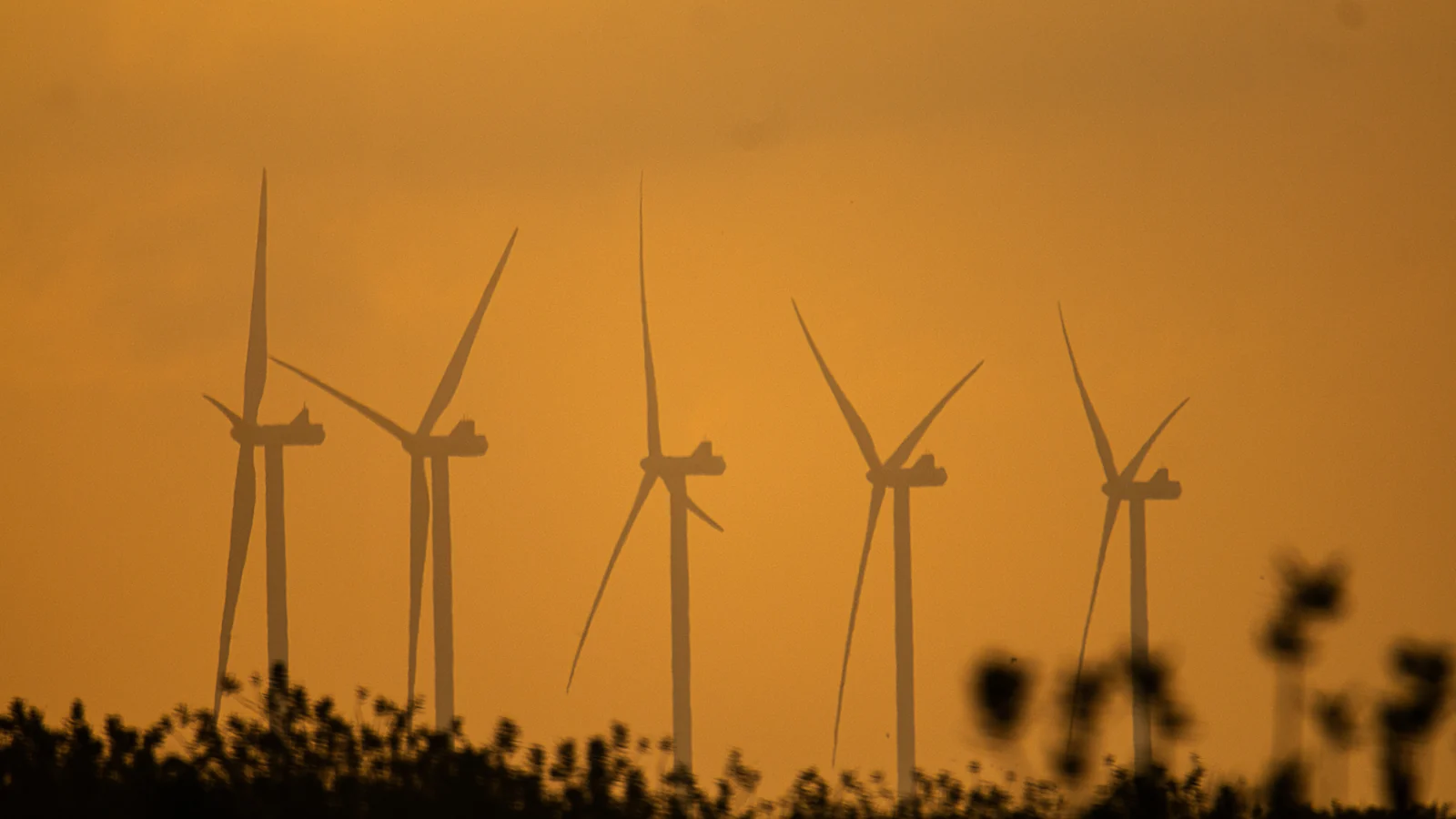
Beyond those milestones, WindForce said it was advancing a development pipeline of more than 240 MW, including a proposed 50 MW Mullikulam wind project through Aeroforce (Pvt) Ltd and a 10 MW wind project through Safe Power International Ltd. Managing Director Manjula Perera said the company’s ambition was to double, within three years, the capacity it had built over 16 years.
What it means for Israeli investors
Sri Lanka’s energy transition is no longer only a policy slogan: a listed developer is commissioning floating solar and grid-scale batteries, has closed financing on a 100 MW solar park, and has brought in IFC capital. For Israeli investors and technology firms with experience in solar, storage, grid software or project finance, that is a more concrete market signal than a target on a slide.
It is not a risk-free one. Curtailment already cost WindForce an estimated Rs 193.57 million of revenue in a single half-year, and compensation remains uncertain. Anyone considering a co-investment, equipment supply or a separate renewable project should look hard at offtake contracts, grid constraints and the approvals path, not only at installed-capacity headlines. Kenglobe Lanka can help you assess how a renewable or energy-storage idea might be structured in Sri Lanka, and introduce the right local context. We do not publish official tender portals or third-party filing routes on this page.
Talk to us
If you would like to discuss renewable energy, storage or related investment in Sri Lanka, contact Kenglobe Lanka. Write to sh@kenigs.com or message us on WhatsApp.
This page is general information, not investment advice. Figures are as reported in the company’s 12 November 2026 first-half update and may be updated in later filings.
Source: WindForce PLC first-half FY2026/27 update, as reported by Daily FT on 12 November 2026