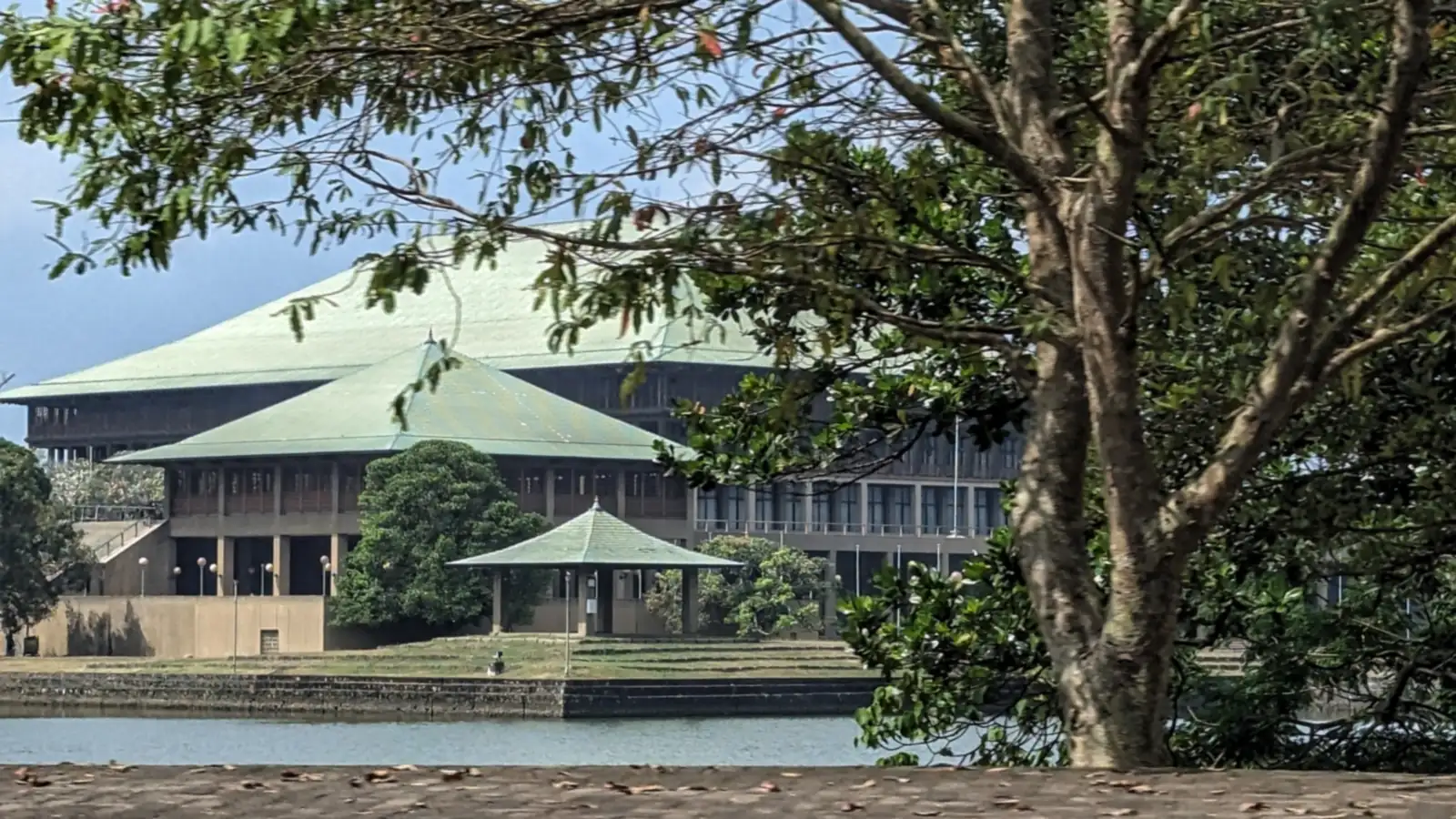
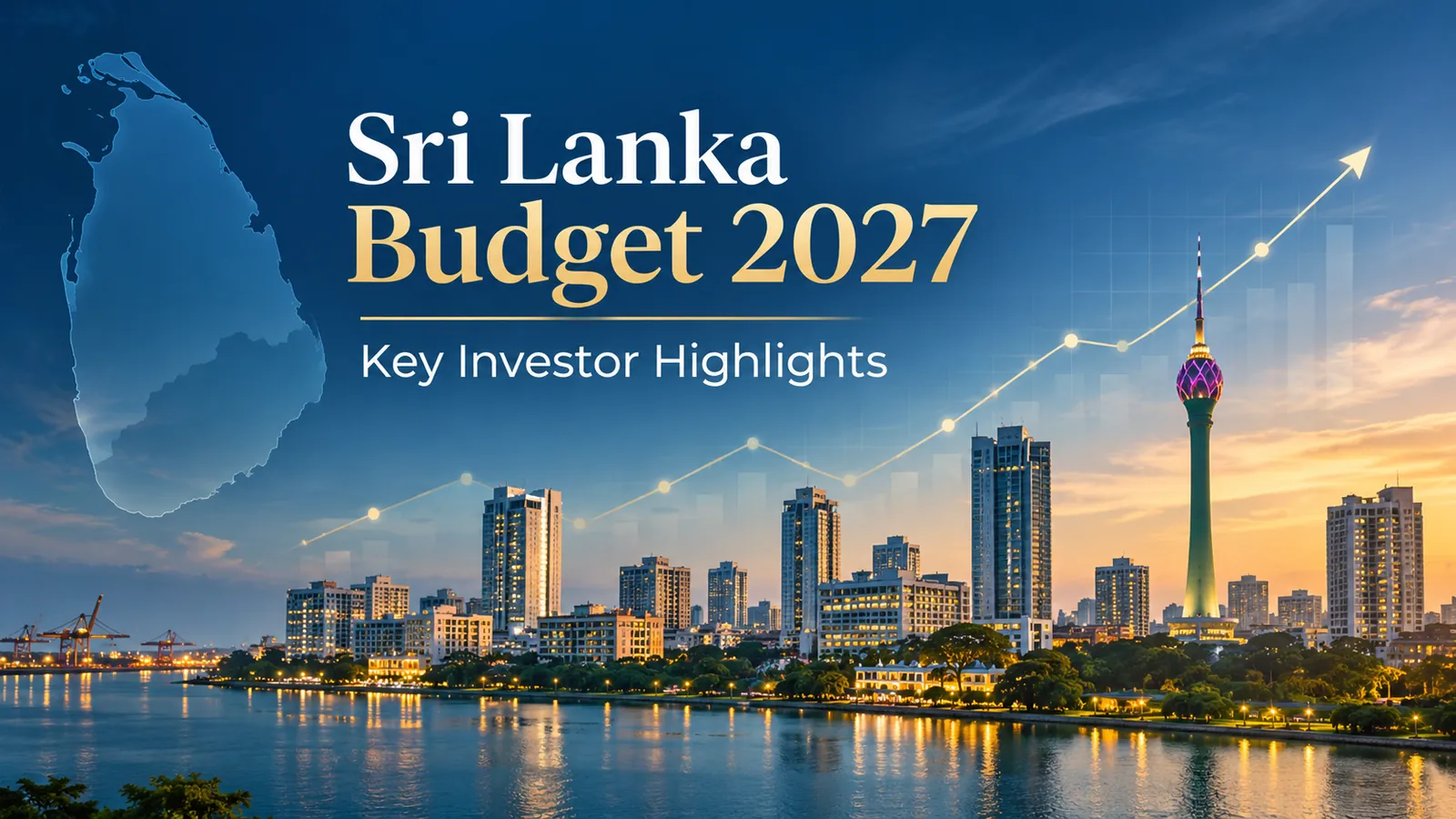
On 20 November 2026, Sri Lanka’s Parliament passed the second reading of the Appropriation Bill for 2027 with a majority of 97 votes: 157 in favour and 60 against. The division was held at 6.50 p.m. after a seven-day debate that began on 13 November, the day after President Anura Kumara Dissanayake, in his capacity as Minister of Finance, presented the budget on 12 November.
The bill now moves to a committee-stage debate scheduled over 19 days, from 21 November to 14 December. The final third-reading vote is scheduled for 14 December 2026 at 6.00 p.m.
The vote came in the same week as two other signals that matter for investors: a supportive commentary on the budget from Fitch Ratings on 18 November, and reports that the IMF Executive Board will take up Sri Lanka’s seventh programme review on 2 December.
The budget in numbers
According to figures reported after the vote by The Island, the 2027 Budget projects a deficit of Rs. 1.753 trillion, equivalent to 4.5% of GDP. Total government expenditure is estimated at Rs. 7.933 trillion, compared with Rs. 7.309 trillion in the revised estimates for 2026, while government revenue and grants are projected at Rs. 6.18 trillion.
The investment measures announced in the budget speech, which we covered in our Budget 2027 article for foreign investors, remain proposals at this stage. The second-reading vote approves the bill in principle; the final vote is still to come, and tax changes typically also require their own amending legislation or regulations before they take effect.
What Fitch said
In a commentary from Hong Kong dated 18 November 2026, Fitch said the 2027 budget signals the government’s ongoing commitment to fiscal discipline and debt reduction while accommodating higher spending on investment and cyclone reconstruction. The key points:
- Primary surplus: the budget targets 2.3% of GDP in 2027, down from an estimated 3.6% in 2026. The 2026 outcome is well above the 2.5% target in last year’s budget. The lower 2027 target reflects lower revenue and higher capital spending, but Fitch said it remains consistent with a debt-reduction path.
- Deficit: this implies a 2027 deficit of 4.5% of GDP, wider than 3.7% in 2026.
- Spending ceiling: primary expenditure is budgeted at 13.6% of GDP, above the 13% ceiling under the 2024 Public Finance Management Act. Fitch attributed the temporary deviation mainly to capital spending for reconstruction after Cyclone Ditwah, including LKR 260 billion carried forward from a December 2025 supplementary budget, and to higher public capex plans.
- Revenue: revenue is budgeted to moderate to 15.8% of GDP from 16.6% in 2026, as the boost from pent-up vehicle imports fades, but Fitch said efforts to broaden the tax base are supporting more broad-based revenue gains.
- IMF alignment: Fitch said the budget is broadly aligned with IMF programme parameters, which should support the seventh review.
Fitch also restated the vulnerabilities. It forecasts government debt at about 92% of GDP in 2026, down from 115% in 2022 but well above the 55% median for ‘B’ rated sovereigns, and interest payments at around 41% of revenue in 2026, more than three times the ‘B’ median. Fitch upgraded Sri Lanka to B-/Stable in September; this commentary is not a new rating action.
The IMF timeline
Under the staff-level agreement reached on 4 October 2026, IMF Executive Board approval of the seventh review was made contingent on two things: presentation of a 2027 Budget in line with programme parameters, and completion of a financing-assurances review covering multilateral contributions and progress with debt restructuring. If approved, Sri Lanka would have access to SDR 254 million (about USD 345 million), taking total disbursements under the four-year arrangement to about USD 2.7 billion.
At the post-monetary-policy briefing on 20 November, Central Bank Governor Dr. Nandalal Weerasinghe said he expected the Board to meet shortly and the tranche to be released before the end of the year. On 22 November, Sri Lankan media reported that the Board has scheduled 2 December to consider the review, together with the 2026 Article IV consultation. The current arrangement is due to end in March 2027; Fitch noted that the government has set up a committee to assess a potential follow-on arrangement, but nothing has been agreed.
What it means for Israeli investors
Taken together, this is a week of process milestones rather than new incentives. The practical reading:
- Policy continuity looks more likely, not guaranteed. A clear second-reading majority and Fitch’s view that the budget keeps the debt path intact reduce near-term fiscal uncertainty. The final vote on 14 December and the IMF Board decision on 2 December are the next checkpoints.
- Treat budget incentives as proposals. If an investment case depends on a budget measure, such as a capital allowance or a sector incentive, build the timeline around enactment and implementation, and confirm the final text before committing capital.
- Watch the post-March 2027 anchor. The IMF programme ends in March 2027. Whether a follow-on arrangement is agreed will matter for how investors and lenders read policy discipline after that date.
- Macro risks remain. Debt and interest costs remain high by rating-peer standards, and the Central Bank raised its policy rate to 9.00% on 20 November because of inflation pressure. Local-currency financing costs and inflation still need realistic assumptions.
None of these announcements changes BOI procedures, Port City rules or property-ownership conditions, and none contains incentives specific to Israeli investors. Project-level due diligence, local legal and tax advice, and a clear approvals timeline remain the basis of any decision.
Sources
- Parliament of Sri Lanka, Second Reading of Appropriation Bill for 2027 passed with a majority of 97 votes, 20 November 2026
- Fitch Ratings, Sri Lankan Budget Preserves Debt Reduction Path, 18 November 2026
- IMF, Staff-level agreement on the Seventh Review under the EFF with Sri Lanka, Press Release No. 26/318, 4 October 2026
- Daily FT, IMF tranche expected before year-end: CBSL, 21 November 2026
- Sri Lanka Mirror, IMF to consider seventh review on December 2, 22 November 2026
- The Island, 2027 Budget second reading passed by 97-vote majority, 21 November 2026
Talk to us
If you would like to discuss how the budget timeline and the IMF review affect a planned Sri Lanka investment, contact Kenglobe Lanka. Write to sh@kenigs.com or message us on WhatsApp.
This page is general information, not investment, legal or financial advice. Budget measures remain subject to parliamentary approval and implementing legislation, and the IMF Board schedule and outcome may change.